
LEARNING CENTER WATER HEATERS
No hot water? Here’s what’s actually wrong (gas and electric)
The short answer
No hot water usually means one failed part, not a dead tank. On a gas heater it’s most often the pilot or a bad thermocouple, a $200–$300 fix. On an electric heater it’s usually a heating element or thermostat, roughly $300–$600. Check your breaker first. That part’s free.
Cold shower this morning? Before you price out a whole new tank, know this: most no-hot-water calls come down to one small part that gave out. These are everyday jobs for us in Louisville, and the fix usually costs a fraction of a full replacement.
The first thing that matters is what kind of heater you’ve got. Gas and electric fail in completely different ways, and the checklist splits right there. Look at the bottom of the tank. If there’s a little access panel and you can hear or see a small flame when it runs, it’s gas. No flame and just a thick electrical cable running to the top? That’s electric.
Gas: when the pilot won’t stay lit
This is the call we get most. Homeowners say it almost word for word: “the pilot light won’t stay lit.” You hold the button down, the flame catches, you let go, and it dies. That’s a story with a short list of suspects, and they climb in cost.
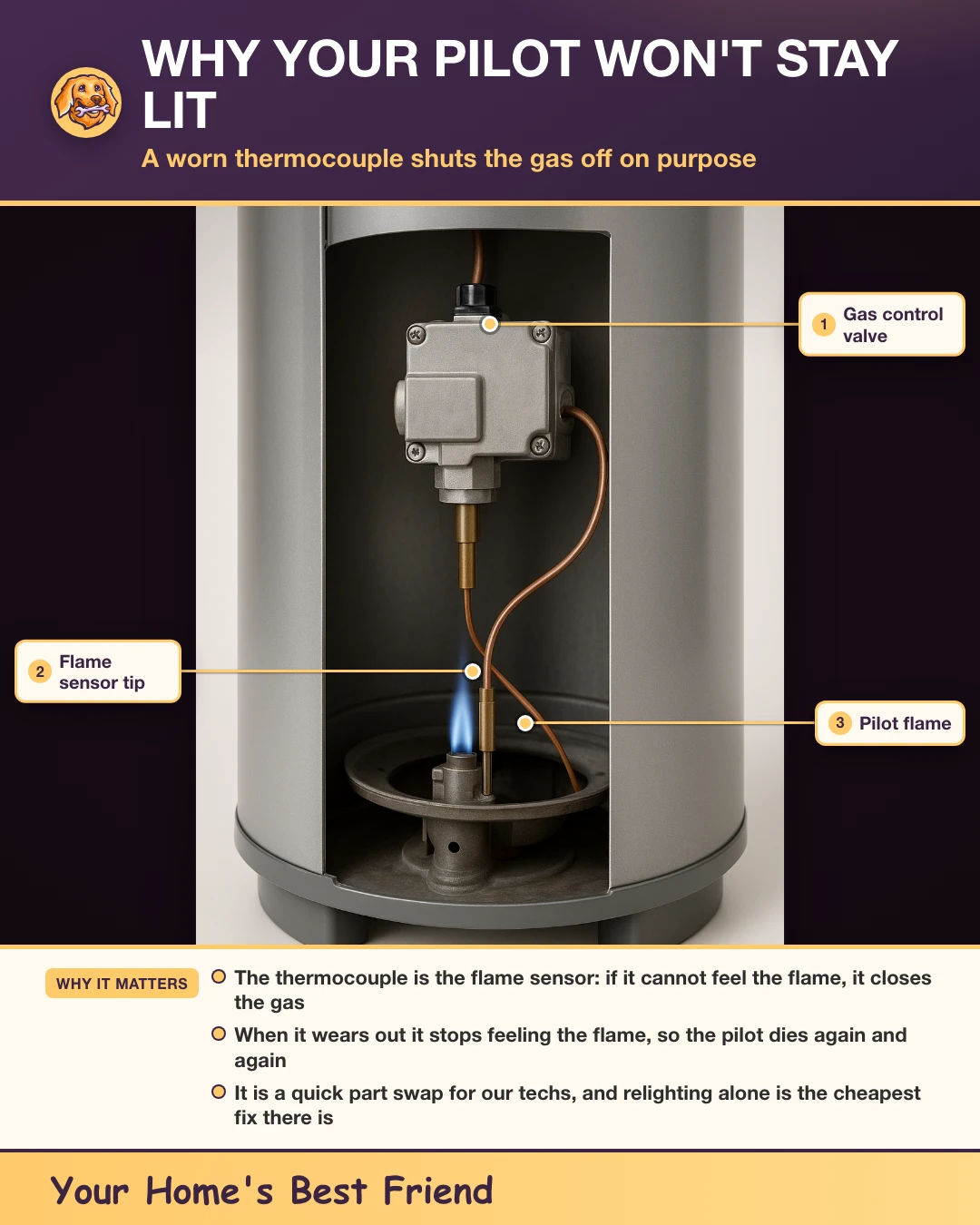
- Pilot just went out Sometimes a draft or a hiccup blows it out and it relights fine. A straight relight runs under $100. If it holds, you’re done cheap.
- Pilot lights but won’t stay lit (thermocouple) Most of the time this is the thermocouple, the little metal sensor sitting in the flame. It tells the gas valve the pilot is burning. When it fails, the valve shuts the gas off as a safety, so the flame dies the second you let go of the button. Replacing it runs $200–$300, and it’s the fix behind most “won’t stay lit” calls.
- Burner is dirty or the flame sensor is fouled Sometimes the burner needs to be pulled and serviced, or the flame sensor cleaned, before the heater will run right. Those land in the low-to-mid hundreds.
- Gas control valve failed This is the top of the ladder. The control valve is the brain of a gas heater. When it goes, the pilot and thermocouple can be perfect and you still get nothing. Replacing it runs $600–$800 depending on the unit. When we swapped a gas control valve this past May, it landed right inside this range — no surprise math.
Notice the spread. A relight is about a hundred bucks and a control valve is closer to seven. That’s why a real diagnosis matters before anyone quotes you a new heater. A gas water heater diagnosis runs $100–$200. It’s a paid visit, not a freebie, but it tells you exactly which rung of that ladder you’re on.
Electric: no pilot, so start at the breaker
Electric heaters have no flame and no pilot, so the whole gas checklist is off the table. Good news: the first thing to check is something you can do yourself, right now, for free.
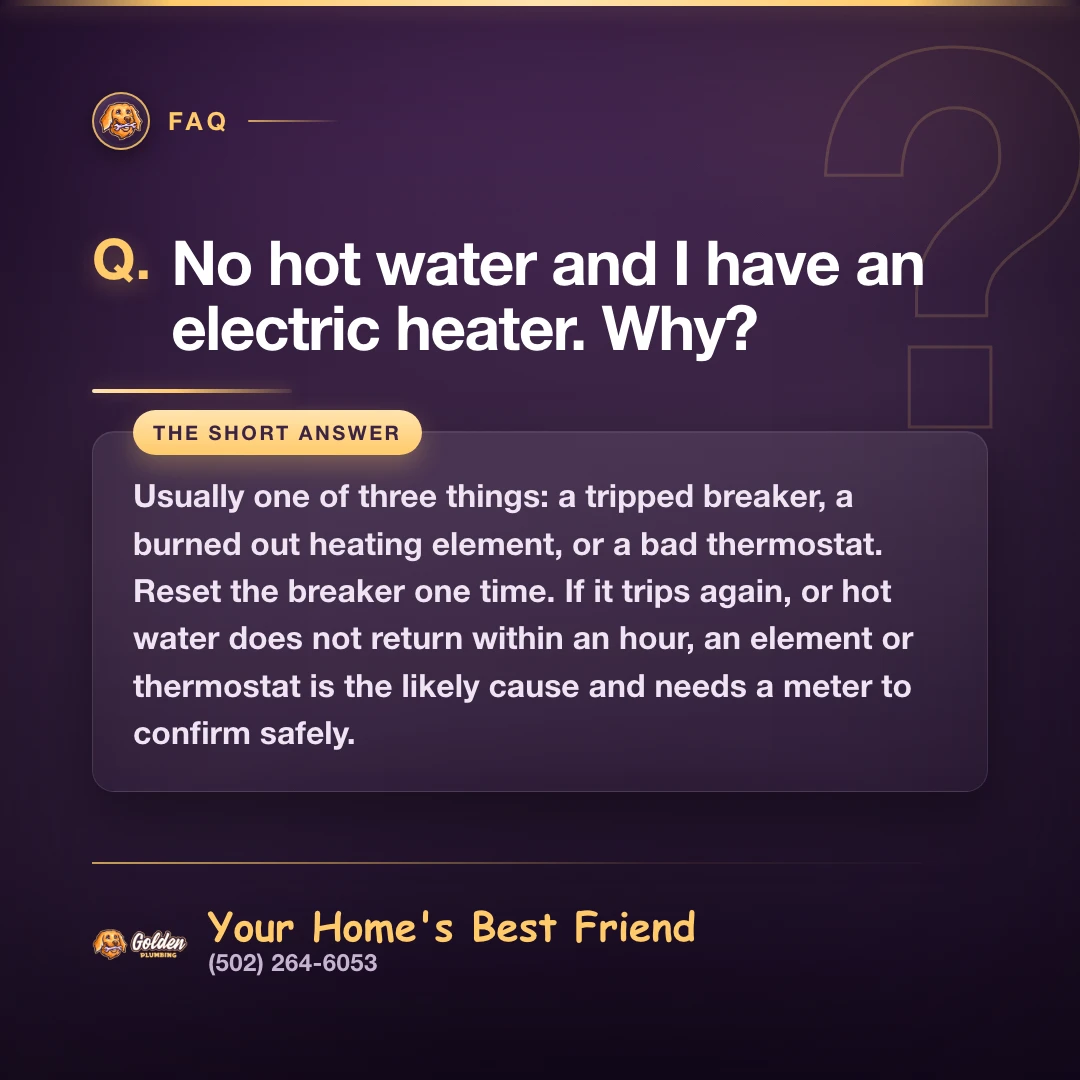
- Tripped breaker Go to your panel and look for the water heater breaker. If it’s flipped, reset it. If it trips again immediately, stop and call us, because something’s shorting and that’s not a DIY chase.
- Reset button on the tank Electric heaters have a red reset button behind the upper access panel, on the thermostat. If it popped, press it. If it pops again, the thermostat or element is the real problem underneath.
- Failed heating element Most electric tanks have two elements. A dead upper element means no hot water at all; a dead lower one means it runs out fast. Replacing a single element runs $300–$400.
- Elements and thermostats together When both elements are shot or the thermostats have gone with them, we replace the pair plus thermostats for $500–$600. That’s usually an older tank telling you something.
An electric water heater diagnosis runs $100–$200. Same deal as gas: you pay for it, and it pins the problem so you’re not buying parts on a guess.
When this article isn’t your situation
A couple of things aren’t a “which part failed” question at all. If either of these is you, skip the ladder:
- You’ve got water pooling under the tank A leaking tank isn’t a repair. Once the steel liner rusts through, there’s no part to swap. That’s a replacement conversation, and sitting water near a gas burner or electrical connection needs eyes on it soon.
- You smell gas Don’t troubleshoot anything. Leave the house and call your gas utility from outside. We’ll handle the heater after it’s safe.
Repair or replace, the straight version
Here’s how we think about it. If the tank is under about ten years old and holding water fine, a thermocouple or an element is worth fixing, and so is a control valve on a tank that’s otherwise solid. You’re spending a few hundred to keep a heater that has years left in it. If it’s leaking or badly corroded, or you’re staring at a control-valve repair on a unit that’s already past twelve years, replacement usually wins. A new tank typically runs several thousand installed, and we’ll pull a live quote instead of throwing out a number we can’t stand behind.
One Louisville detail people miss: Kentucky requires a plumbing permit to replace a water heater, whether you do it yourself or hire it out. For a single home water heater the permit fee is $50 under the state plumbing code. A repair like a thermocouple or element needs no permit. A replacement does, and that $50 belongs in any replacement quote you’re handed. Louisville also won’t let a gas water heater sit in a bathroom or bedroom without proper combustion air, which sometimes changes where a new one can go.
Common questions we get
My pilot light won’t stay lit. Is that always the thermocouple?
Most of the time, yes. When the flame catches and then dies the second you release the button, the thermocouple is the usual culprit, and that runs $200–$300. It can also be a failing gas control valve, which is why a $100–$200 gas diagnosis is worth it before you buy parts.
Can I replace a heating element myself?
Some handy folks do. But you’re draining the tank and cutting power at the panel, then pulling a live element that can crack the porcelain if you rush it. If the breaker keeps tripping, that’s a short, not a DIY job. When you’d rather it just get fixed right, an element swap is $300–$400.
Why isn’t the diagnosis free?
Because a diagnosis is real work. A tech drives out and meters the gas valve or the elements to tell you exactly what failed. A water heater diagnosis, gas or electric, runs $100–$200. That fee buys you a straight answer instead of a guess, and it usually saves you from over-buying.
How do I know if it’s worth repairing at all?
Age and water. Under ten years and dry underneath, repair it. Leaking or badly corroded, or a pricey control-valve fix on an old tank, replace it. A replacement also needs that $50 Kentucky permit, which a repair doesn’t.
The next questions to ask
Not sure whether it’s a cheap part or the whole tank?
Ask Goldie walks you through it in a couple minutes and tells you what a fix runs before anyone comes out. Try it at goldenplumbingky.com/instant-estimate/